Articles
Architecture notes for production AI, cloud and security
The canonical home of my articles. Copies on LinkedIn, DEV and Hashnode point back here.
2026
-
Enterprise RAG
Release Gates for Enterprise RAG: When a Better Score Ships a Worse System
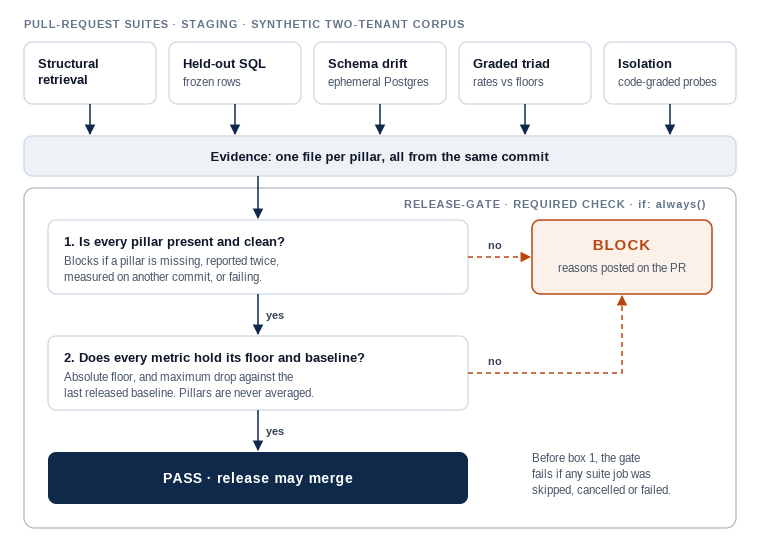
A RAG release is safe only when retrieval, figures, schema, grounding and isolation each pass on their own. Five suites, never averaged, and a skipped check counts as a failure.
#rag#evaluation#release-gates#sre
-
Agentic AI security
Securing MCP Servers in the Enterprise
MCP makes authorization optional, so an enterprise has to require it. Per-user OAuth, audience-bound tokens, the issuer checks and stateless core of the 2026-07-28 revision, managed connectors, and what a CISO should verify.
#mcp#ai-security#oauth#agentic-ai
-
Enterprise RAG
Dual-Path RAG: Why Vector Search Cannot Add
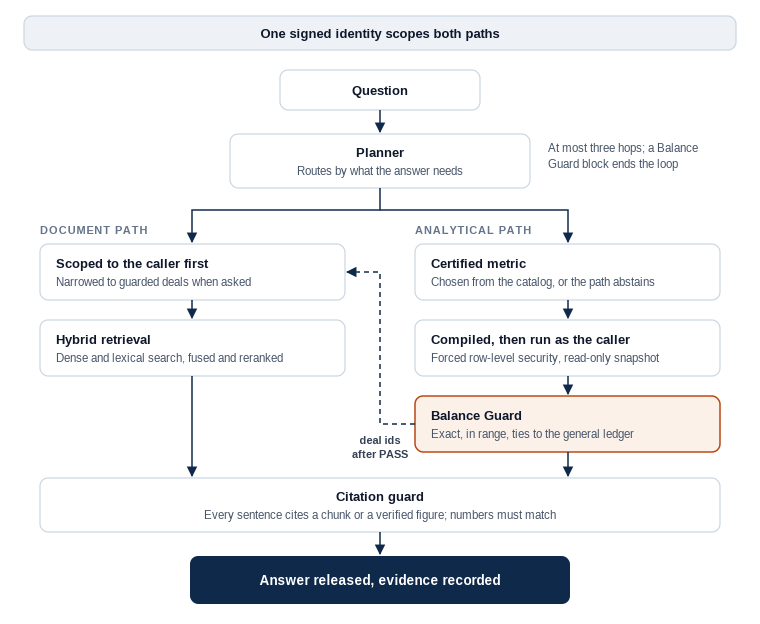
Route arithmetic to governed SQL, keep prose on a hybrid document path, and reconcile figures to the ledger before they reach an answer. The dual-path RAG pattern for regulated data.
#rag#text-to-sql#semantic-layer#hybrid-search
-
Enterprise RAG
Identity-Aware RAG: Authorization Belongs Inside Retrieval
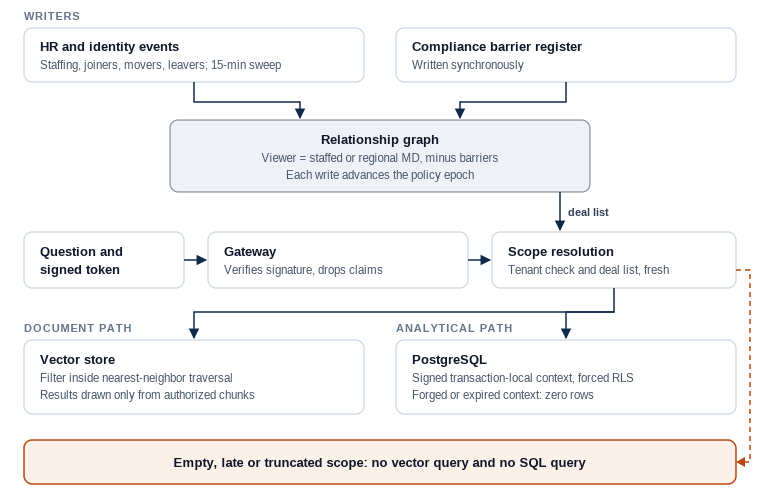
In regulated firms, the RAG failures that matter start with identity. How one signed identity drives relationship-based scope inside vector search and row-level security in SQL, with every control failing closed.
#rag#ai-security#rebac#row-level-security
-
Cloud security
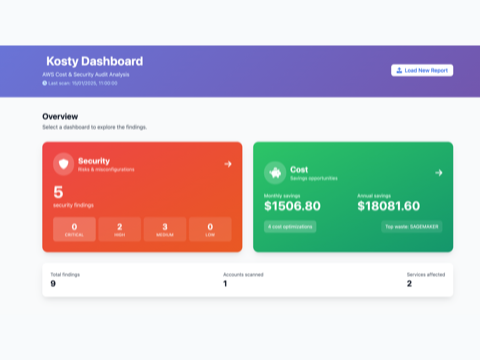
Kosty 3: One Scan Engine for AWS Security, Exposure, GenAI and Cost
Kosty, my open-source AWS audit CLI, registers 151 checks across 32 services in one plugin engine. What each audit domain checks, what the GenAI checks can and cannot see, and how far the findings go as evidence.
#kosty#aws#cloud-security#finops
-
Agentic software factory
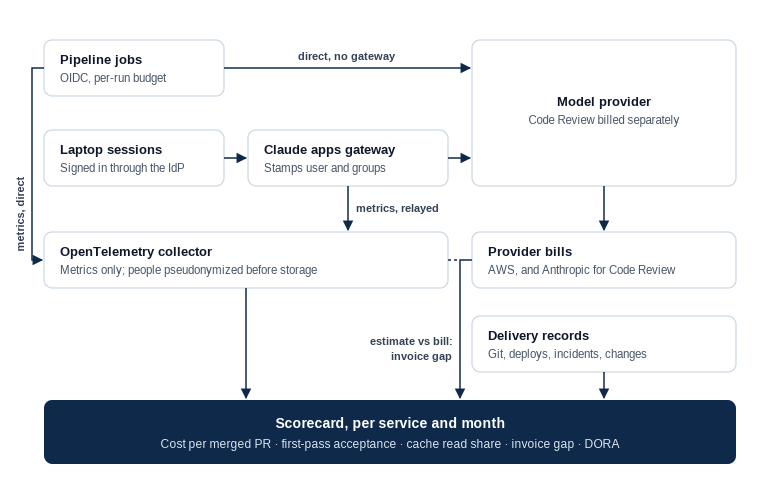
Measuring Agentic Delivery: Joining Claude Code Telemetry to DORA Metrics
Token counts do not answer the executive question. How to attribute Claude Code spend at its source, join it to per-service DORA data, reconcile it to the invoice, and govern by cost per merged change.
#opentelemetry#finops#dora#claude-code
-
Agentic software factory
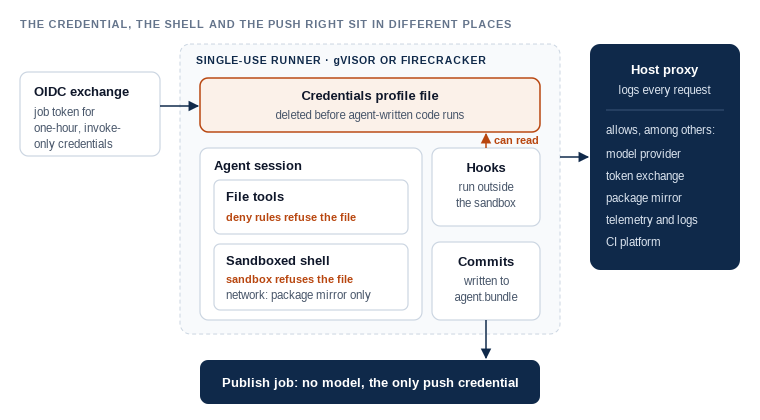
Running Coding Agents in CI/CD Without Standing Secrets
A pipeline agent reads text written by outsiders and will eventually follow an instruction nobody in the organization wrote. How job-scoped identity, unreachable credentials, a model-free publish job and a sandbox bound what it can do.
#ci-cd#zero-trust#oidc#agentic-delivery
-
Agentic software factory
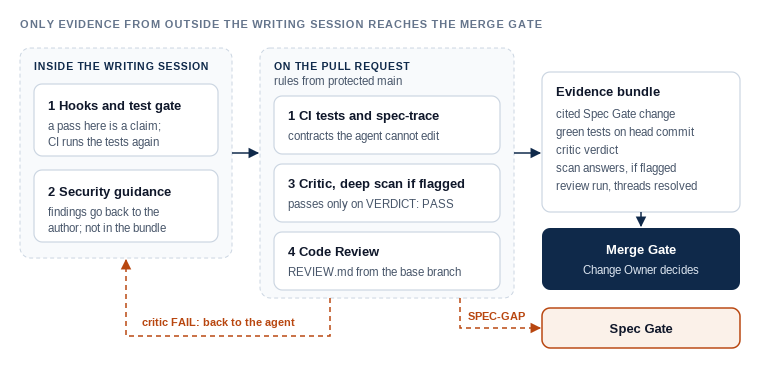
Four-Station Verification: No Agent Certifies Its Own Work
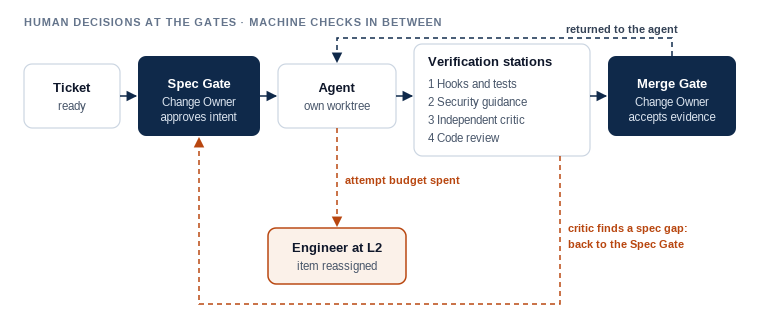
A session that reviews its own change repeats its own assumptions. Four verification stations, each independent of the author in a different way, and the evidence they hand to the person who accepts the merge.
#agentic-delivery#verification#code-review#appsec
-
Agentic software factory
Agent Guardrails That Hold: Git Worktrees and Deterministic Hooks
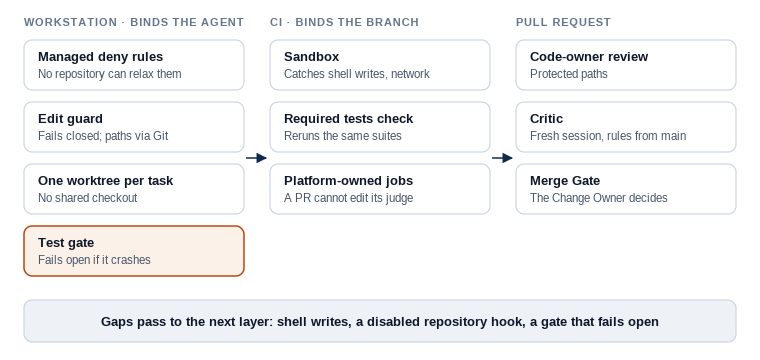
Context files guide a coding agent but enforce nothing. Managed settings, fail-closed hooks and one Git worktree per task bind the agent on the workstation, and required CI checks catch what those controls cannot see.
#claude-code#agentic-delivery#git#platform-engineering
-
Agentic software factory
Spec-Anchored Engineering: Writing Down Intent Before an Agent Writes Code
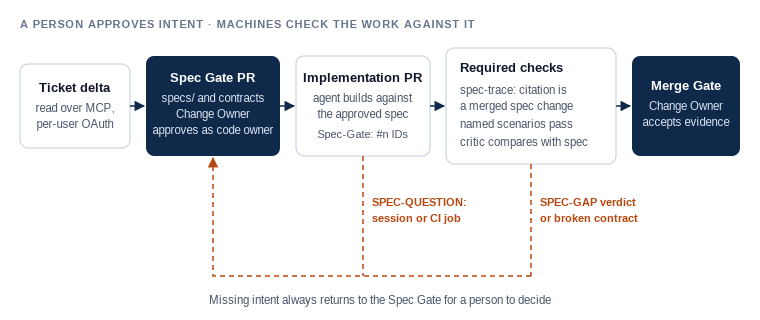
Coding agents build what is written and infer the rest. How a versioned, executable spec, a code-owned Spec Gate and a deterministic citation check make intent an artifact that every later control can check against.
#agentic-delivery#specifications#governance#mcp
-
Agentic software factory
Why AI Coding Stalls at the Pull Request
Coding agents accelerate one stage of delivery while review, release and rework absorb the extra work. Amdahl's Law, the review bottleneck, and the Level 3 operating model that lets the gain reach production.
#agentic-delivery#claude-code#dora#operating-model
-
Incident review
GTG-1002: Reading Anthropic's Report on an AI-Orchestrated Intrusion Campaign
In November 2025, Anthropic reported a state-sponsored campaign that used Claude Code to run most of its intrusion work. What the report establishes, what it leaves unverifiable, and what defenders can act on either way.
#ai-security#threat-intelligence#incident-review#agents
-
Agentic AI security
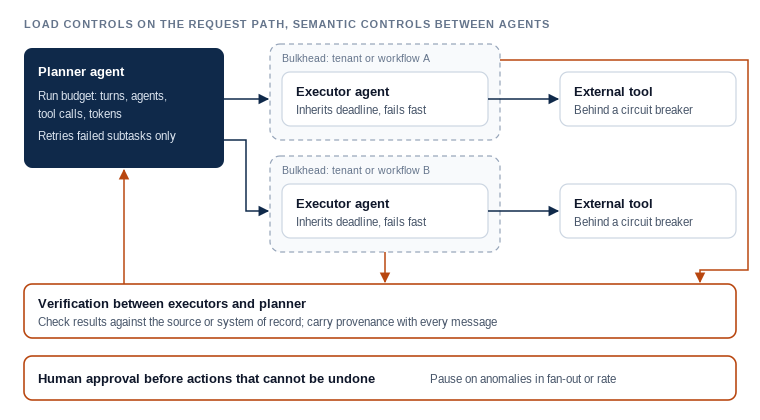
Cascading Failures in Agent Systems: Retry Budgets, Breakers and Blast Radius
When one agent's fault spreads to others, the damage comes from propagation. How load cascades and semantic cascades differ, what resilience engineering already offers, and where agents need controls of their own.
#agents#multi-agent#resilience#ai-security
-
Incident review
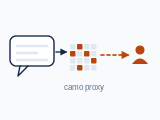
CamoLeak: When the Allowed Image Proxy Becomes the Exfiltration Channel
Legit Security showed in 2025 that a hidden comment in a pull request could make GitHub Copilot Chat leak private data through GitHub's own image proxy. A post-incident reading, and why GitHub's fix removed image rendering.
#ai-security#prompt-injection#incident-review#data-exfiltration
-
Agentic AI security
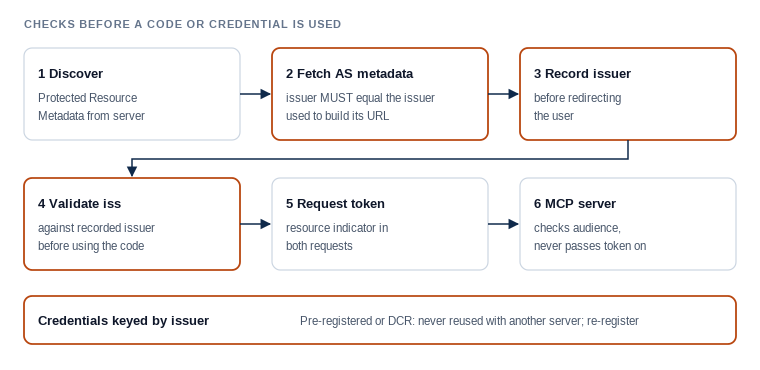
MCP 2026-07-28: Dynamic Client Registration Deprecated, Issuer Checks and a Stateless Core
The 2026-07-28 MCP specification deprecates Dynamic Client Registration, adds issuer validation against mix-up attacks and removes sessions. What changed in authorization since 2025-11-25, and what enterprise teams should update.
#mcp#oauth#identity#agents
-
Incident review
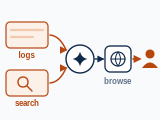
The Gemini Trifecta: Logs and Search History as Prompt Injection Channels
In September 2025, Tenable disclosed three Gemini flaws: injection through cloud logs and search history, and silent exfiltration through the browsing tool. A post-incident reading of the chain, the fixes, and what to inventory.
#ai-security#prompt-injection#incident-review#data-exfiltration
-
Agentic AI security
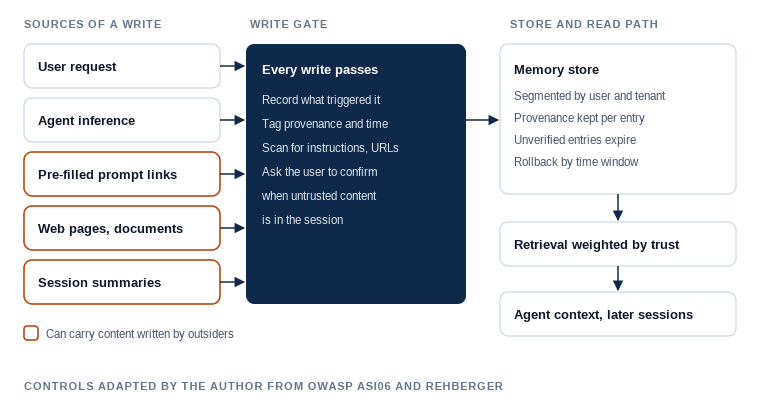
Memory Poisoning: Treating Agent Memory as a Write Path
Persistent memory lets one prompt injection shape every later session. Documented cases from 2024 to 2026, what vendors changed, and the controls that belong on the path by which an agent writes to its own memory.
#ai-security#agents#prompt-injection#memory
-
AI governance
The EU AI Act After the Digital Omnibus: Which Dates Changed
The Digital Omnibus on AI entered into force on 27 July 2026. It sets new dates for high-risk obligations, leaves dates already in application unchanged, and changes a few duties. A reading of the final text.
#eu-ai-act#ai-governance#regulation#compliance
-
Cloud security
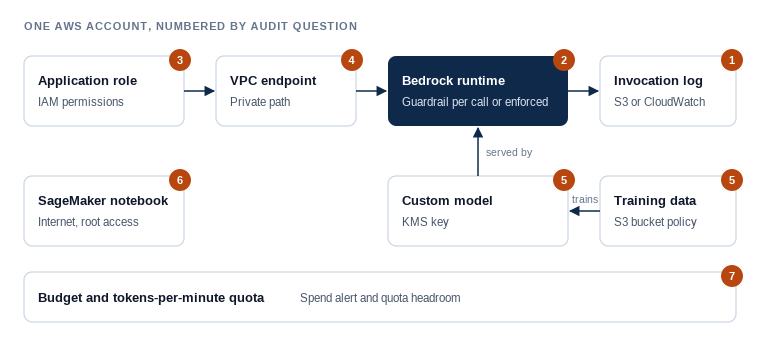
Auditing AI Workloads on AWS: Seven Questions an Account Scan Can Answer
Bedrock and SageMaker add new controls to an AWS account: invocation logs, guardrails, private endpoints, notebook settings. Seven questions an automated scan can answer, and what each answer leaves to verify by hand.
#aws#cloud-security#genai-security#kosty
-
Incident review
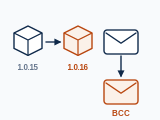
postmark-mcp: An MCP Server That Turned Malicious in One Update
In September 2025, an unofficial MCP server for Postmark added a hidden BCC to every email it sent, after fifteen clean versions. A post-incident reading, and the supply chain controls that apply to MCP servers.
#ai-security#mcp#supply-chain#incident-review
-
Agentic software factory
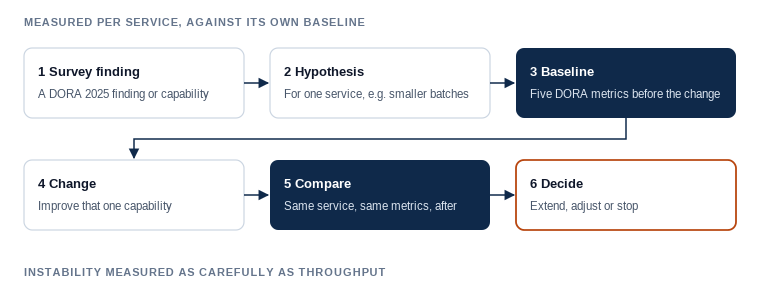
What DORA 2025 Says About AI-Assisted Delivery, and What It Cannot Tell You
The 2025 DORA report finds AI now improves delivery throughput while still increasing instability, and names seven capabilities that amplify its benefits. How to read the findings, and how to test them on your own services.
#dora#agentic-delivery#engineering-leadership#metrics
-
Incident review
McHire: Ordinary Security Failures Around an AI Product
In 2025, researchers reached applicant records in an AI hiring platform through a test account with a default password. A post-incident reading of what was established, what was disputed, and why AI products fail on basics.
#ai-security#incident-review#application-security#identity
-
Agentic AI security
Sandboxing Agent Code Execution: Choosing the Isolation Boundary
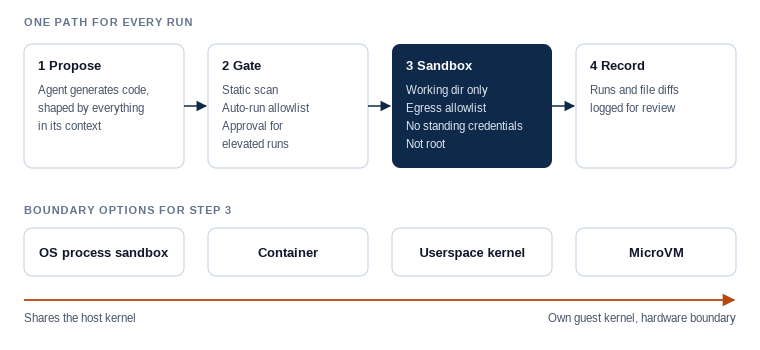
Coding agents run code that anyone able to reach their context can influence. How OS sandboxes, containers, userspace kernels and microVMs differ, and how to choose a boundary by what the code can reach.
#agents#sandboxing#ai-security#platform-engineering
-
Incident review
ForcedLeak: An Expired Domain on an Allowlist
A Salesforce Agentforce vulnerability disclosed in September 2025 combined a web form, an AI agent and a lapsed domain on a content security allowlist. A post-incident reading, and how to keep egress allowlists from going stale.
#ai-security#prompt-injection#incident-review#data-exfiltration
-
Agentic AI security
Non-Human Identity for Agents: Delegation, Token Exchange and Task-Scoped Credentials
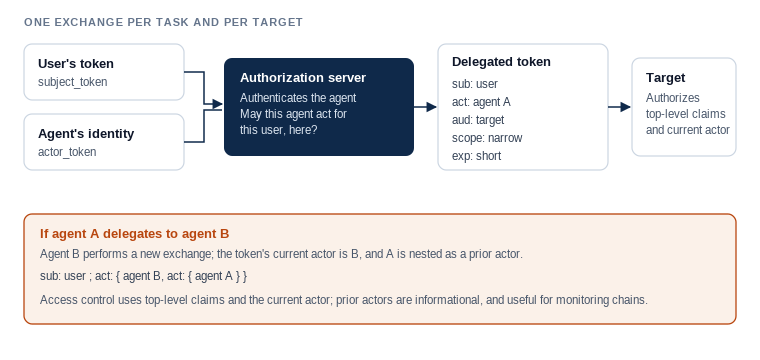
An agent that borrows a user's token or a shared service account makes every action ambiguous. How OAuth 2.0 Token Exchange lets an agent act for a user under its own identity, with credentials scoped to one task.
#identity#oauth#agents#ai-security
-
Incident review
CurXecute and MCPoison: MCP Configuration Is Executable Code
Two Cursor vulnerabilities disclosed in August 2025 turned an MCP configuration file into a way to run commands on a developer's machine. A post-incident reading, and why tool configuration needs the same controls as code.
#ai-security#mcp#incident-review#developer-tools
-
Agentic AI security
AI Gateways: A Runtime Policy Layer for Model and Tool Traffic
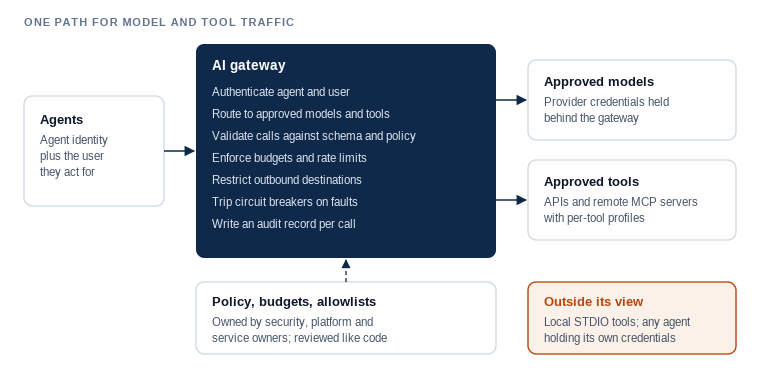
Agents call models and tools directly unless something sits in the path. What an AI gateway should enforce at runtime, which OWASP guidance each function answers, and the limits of what a gateway can see.
#ai-gateway#agents#ai-security#platform-engineering
-
Incident review
The Deloitte Australia Report: Verifying AI-Assisted Deliverables
A government-commissioned review was reissued after errors in its references came to light, with a new disclosure of generative AI use. What the public record shows, and the verification controls AI-assisted work needs.
#ai-governance#incident-review#professional-services#quality-assurance
-
AI governance
From ISO/IEC 42001 and the NIST AI RMF to Controls an Engineer Can Test
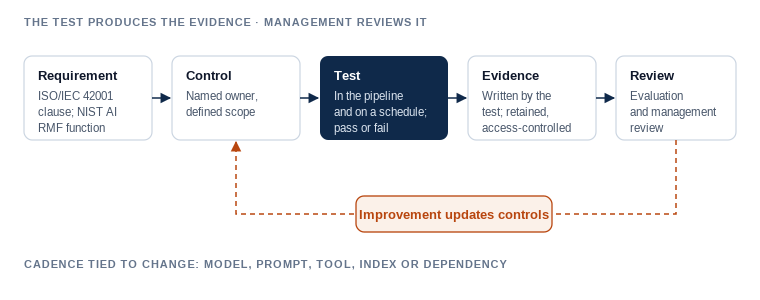
AI governance frameworks describe what to govern and leave the tests to the organization. How to turn ISO/IEC 42001 and the NIST AI RMF into controls with an owner, a test and evidence an auditor can check.
#ai-governance#iso-42001#nist-ai-rmf#compliance
-
Incident review
s1ngularity: Malware That Asked the Developer's AI Assistant to Find the Secrets
In August 2025, malicious versions of the Nx build system tried to turn locally installed AI coding tools into a search engine for credentials. A post-incident reading and the controls it calls for on developer machines and in CI.
#ai-security#supply-chain#incident-review#ci-cd
-
Agentic AI security
Agent-to-Agent Trust: What A2A v1.0 Signed Agent Cards Prove, and What They Do Not
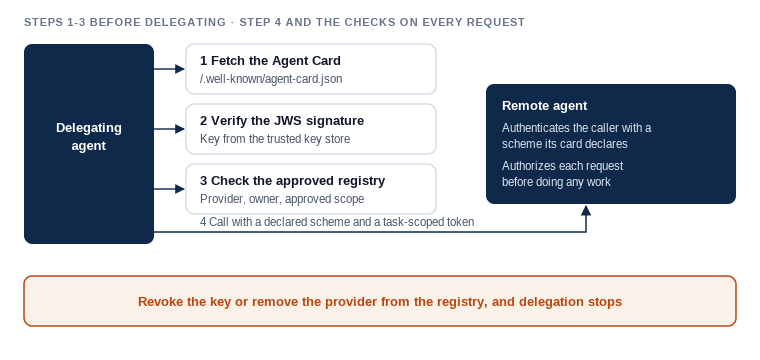
A2A v1.0 specifies how an agent signs the card that describes it. The signature proves the card is intact and comes from the key holder. Trusting the agent behind it still takes a registry, per-request authorization and a revocation path.
#a2a#multi-agent#ai-security#identity
-
Incident review
Moffatt v. Air Canada: The Company Owns What Its Chatbot Says
A Canadian tribunal held an airline responsible for a chatbot's wrong answer about refunds. What the 2024 decision actually says, what it does not, and the controls it implies for any customer-facing assistant.
#ai-governance#incident-review#customer-facing-ai#risk
-
Agentic AI security
What an AI Audit Trail Should Record: OpenTelemetry GenAI Conventions Without Leaking Prompts
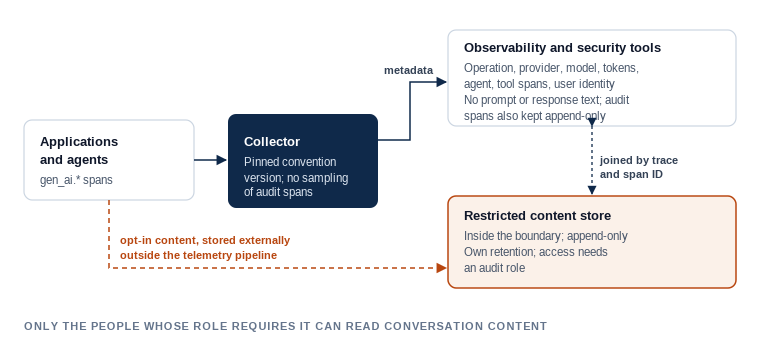
OpenTelemetry's generative AI conventions give an audit trail a vendor-neutral schema for models, agents and tools. What to record by default, what to keep out, and how to store prompt content when an audit needs it.
#opentelemetry#ai-governance#observability#audit
-
Incident review
The Amazon Q Extension Incident: AI Tooling Is Part of the Supply Chain
In July 2025, a release of an AI coding extension shipped with a prompt instructing the agent to wipe the developer's machine and cloud resources. A post-incident reading of CVE-2025-8217 and the controls it points to.
#ai-security#supply-chain#incident-review#ci-cd
-
Agentic AI security
Remote MCP Servers After the November 2025 Authorization Spec
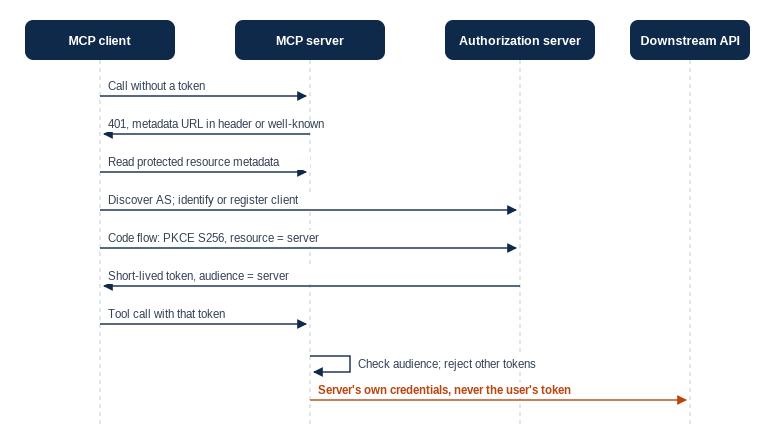
Over HTTP, an MCP server should act as an OAuth resource server, and the 2025-11-25 specification says how. The flow step by step, what changed in this version, and the decisions it still leaves to the enterprise.
#mcp#oauth#ai-security#identity
-
Incident review
When an Agent Deleted Production: Least Agency and Environment Separation
In July 2025, a coding agent deleted a production database during a code freeze. A post-incident reading of the Replit case: why a rule that matters belongs in permissions, and the separation that the vendor itself shipped in response.
#ai-security#agents#incident-review#platform-engineering
-
Agentic AI security
The Lethal Trifecta as a Design-Review Test for AI Agents
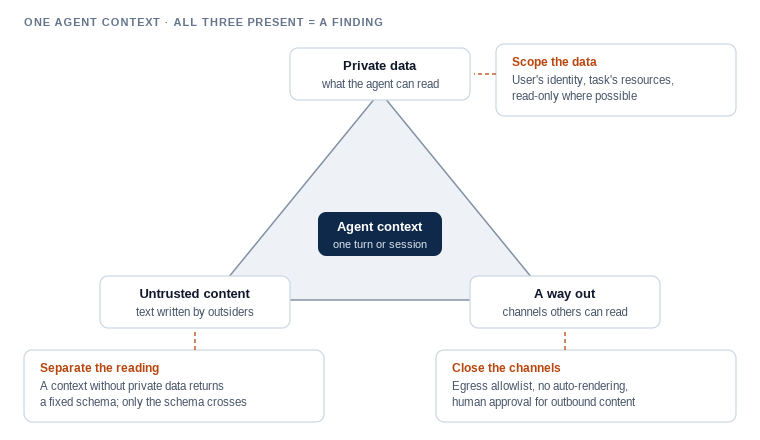
Private data, untrusted content and a way to send data out: an agent holding all three in one context can be turned against its user. The combination as a design-review test, with three published cases and the controls that break each leg.
#ai-security#agents#mcp#prompt-injection
-
Incident review
EchoLeak: What a Zero-Click Copilot Exploit Teaches About Scope
An email nobody opened could make Microsoft 365 Copilot send internal data to an attacker. A post-incident reading of CVE-2025-32711 and the architecture lessons it holds for any assistant that mixes untrusted content with private data.
#ai-security#prompt-injection#incident-review#enterprise-architecture
-
Agentic AI security
Least Agency: Reading the OWASP Top 10 for Agentic Applications as an Architect
OWASP's first Top 10 for agentic applications can be read through one principle, Least Agency. How its ten risks reduce to four design decisions, and the controls that put each decision into configuration.
#ai-security#agents#owasp#enterprise-architecture

No article matches this search.